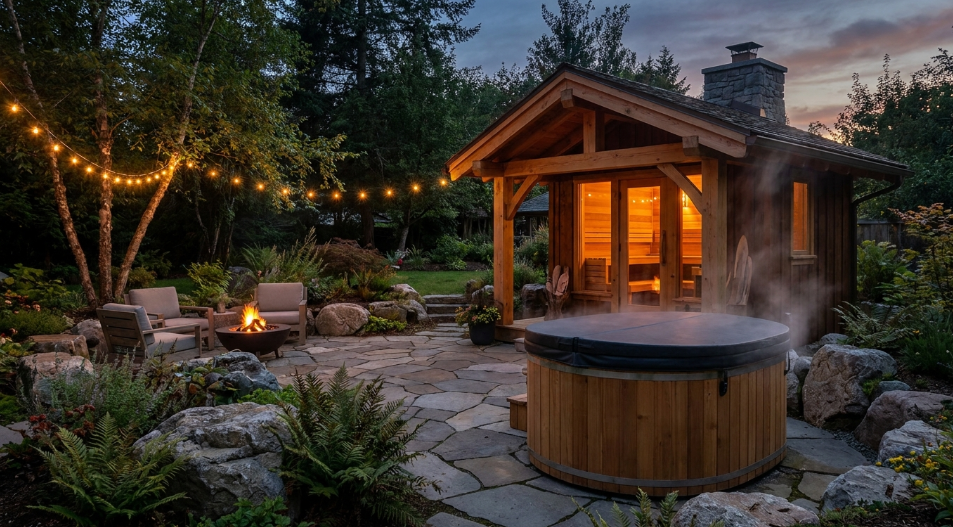
A basic contrast therapy setup pairs a 6 to 8 kW sauna heater capable of holding 170 to 190 degrees Fahrenheit with a chilled plunge tub running 50 to 60 degrees, cycled 15 to 20 minutes hot to 2 to 4 minutes cold for 2 to 3 rounds. The heater and the chiller each need their own dedicated electrical circuit, and the two units are usually placed a few steps apart so the transition between hot and cold happens quickly rather than after a long walk that lets body temperature drift back toward neutral.
What does a hot-to-cold cycle actually look like?
Most home contrast routines follow a simple structure: a full sauna session of 15 to 20 minutes at normal operating temperature, then a short, sharp cold exposure of 2 to 4 minutes in a plunge chilled to 50 to 60 degrees Fahrenheit, then a rest period of 5 to 10 minutes before repeating. Two to three total rounds is common for a home setup, though some people do a single round on a tight schedule. The heater needs to recover its temperature between rounds without a long lag, which is one reason sizing the heater correctly to the room’s cubic footage matters more in a contrast routine than in a single-session sauna, since it is being asked to hold steady output across multiple cycles in one sitting rather than heating once and coasting.
How should the two units be wired?
A traditional electric sauna heater in the 6 to 8 kW range draws 25 to 33 amps and needs a dedicated 240V circuit sized to its nameplate rating, same as a standalone heater setup. A plunge chiller is a separate electrical load, typically drawing anywhere from 5 to 15 amps depending on tank size and how hard the compressor is working to hold 50 to 60 degrees, and most models specify their own circuit requirement in the installation manual. Running both units off the same circuit, or off a shared circuit with anything else in the space, is a common way a session gets cut short by a tripped breaker right when the chiller compressor kicks on mid-cycle. A licensed electrician can size both circuits correctly during the same visit, which is usually cheaper than doing the wiring in two separate trips.
Sizing the chiller side of the pairing
Plunge tubs for home contrast setups typically range from 100 to 300 gallons, and the chiller has to be matched to that volume to hold 50 to 60 degrees consistently rather than drifting warmer after repeated use in one session. Filtration matters here too: a small pump and cartridge filter keeps the water usable between fills, while ozone or UV sterilization add-ons cut down on the frequency of full water changes, which matters more for a tub getting used multiple times a week alongside a daily or near-daily sauna heater. An unchilled tub filled with hose water and ice is workable for occasional use but does not hold a steady temperature across repeated rounds the way a dedicated chiller does, which is the main reason serious contrast routines lean toward a chiller unit rather than ice alone.
What does the evidence actually say about pairing the two?
The strongest evidence for the heat side of contrast therapy comes from Finnish cohort studies linking frequent sauna bathing with lower cardiovascular and all-cause mortality risk, including a large prospective study published in JAMA Internal Medicine and a follow-up analysis in Annals of Medicine that found the association held even after adjusting for cardiorespiratory fitness. A separate study in Heart and Vessels measured short-term changes in blood-based cardiovascular markers after a single Finnish sauna session in regular users, adding mechanistic detail to the population-level findings. This is association data from observational cohorts, not a randomized trial proving that sauna bathing itself prevents cardiovascular events, and none of these studies were designed around a contrast therapy protocol specifically. The cold-water side of the pairing is less settled: a 2025 systematic review and meta-analysis in PLoS One found mixed effects of cold water immersion on general health and wellbeing outcomes, and some resistance-training research suggests cold exposure soon after a lifting session may blunt part of the muscle adaptation response. Anyone pairing sauna and cold plunge on a strength training day may want to separate the two by several hours rather than doing them back to back.
Practical setup notes for a home contrast station
Placing the heater and the plunge within a few steps of each other cuts down on the temperature drift that happens during a long walk between the two, which matters most in the first 30 to 60 seconds after leaving the hot room. A non-slip mat between the two stations reduces the most common injury risk in a home setup, a slip on a wet floor between hot and cold. Outdoor living retailers, SweatDecks among them, stock chiller-ready plunge tubs sized to pair with common heater outputs, and buyers comparing options can shop the current options to see gallon capacity and chiller compatibility listed side by side before choosing a tub size for the space available.
Frequently Asked Questions
What is a typical hot-to-cold contrast therapy cycle?
A common pattern is 15 to 20 minutes in a sauna heated to 170 to 190 degrees Fahrenheit, followed by 2 to 4 minutes in a cold plunge chilled to 50 to 60 degrees, repeated for 2 to 3 rounds with a short rest between each.
Does cold plunging after a sauna session cancel out strength training gains?
Some research suggests cold water immersion right after resistance training may blunt part of the muscle-building response, so pairing the two on strength training days is worth timing carefully, such as saving the plunge for hours later or for non-lifting days.
How cold does a plunge chiller need to run for sauna pairing?
Most contrast setups target 50 to 60 degrees Fahrenheit, which a standalone chiller unit can hold consistently regardless of ambient temperature, unlike an unchilled tub that drifts warmer with each use.
Do I need separate electrical circuits for a heater and a chiller?
In most cases yes. A sauna heater in the 6 to 8 kW range needs its own dedicated 240V circuit, and a plunge chiller typically runs on a separate 120V or 240V circuit depending on the model, so a licensed electrician should size both before installation.
References
- “Association between sauna bathing and fatal cardiovascular and all-cause mortality events.” JAMA Internal Medicine, 2015. https://pubmed.ncbi.nlm.nih.gov/25705824/
- “Joint associations of sauna bathing and cardiorespiratory fitness on cardiovascular and all-cause mortality risk: a long-term prospective cohort study.” Annals of Medicine, 2018. https://pubmed.ncbi.nlm.nih.gov/28972808/
- “Short-term effects of Finnish sauna bathing on blood-based markers of cardiovascular function in non-naive sauna users.” Heart and Vessels, 2018. https://pubmed.ncbi.nlm.nih.gov/29971466/
- “Effects of cold-water immersion on health and wellbeing: A systematic review and meta-analysis.” PLoS One, 2025. https://pubmed.ncbi.nlm.nih.gov/39879231/